Originally published in 2014. Updated for today’s learning environment.
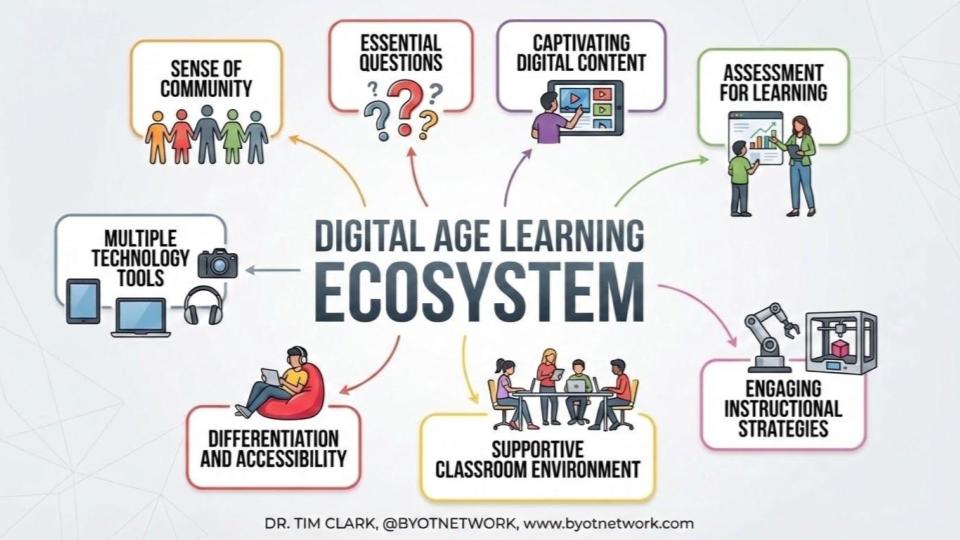
An ecosystem is a system formed by the interaction of a community of living organisms with each other and their environment. Back in 2014, that idea helped me make sense of what I was seeing in classrooms where students were actively using technology to explore ideas, ask questions, and create meaningful work. More than a decade later, that ecosystem has expanded—dramatically.
We now live in a world shaped by artificial intelligence, advanced data systems, and learning platforms that didn’t exist (or weren’t widely used) when this post was first written. We’ve also lived through a global pandemic that forced educators everywhere to rethink where, when, and how learning happens. Yet even with all that change, one thing has remained constant: learning is still deeply human.
What follows is an updated reflection on the components of a modern learning ecosystem—one that embraces innovation while staying grounded in relationships, trust, and balance between digital and face-to-face experiences.
A Sense of Community Still Comes First
A healthy learning ecosystem begins with community. Today’s teachers intentionally build that sense of belonging across physical classrooms, online spaces, and hybrid environments. They know their students’ interests, strengths, and challenges—and they’re willing to learn right alongside them.
Teachers are no longer positioned as the sole content experts. Instead, they act as facilitators, co-learners, and guides, helping students navigate an increasingly complex digital world. Digital citizenship has evolved, too. It now includes not just netiquette, but media literacy, ethical use of AI, understanding algorithms, and managing one’s digital footprint. At the same time, educators are intentional about preserving face-to-face conversations, collaboration, and empathy—because no app can replace human connection.
Essential Questions Matter More Than Ever
When information is everywhere—and increasingly generated by AI—the ability to ask good questions becomes more important than memorizing answers. In a modern learning ecosystem, teachers design learning around essential, open-ended questions that spark curiosity and deeper thinking.
These questions encourage students to analyze, create, and reflect. They also help students learn how to evaluate sources, recognize bias, and make sense of conflicting information. In short, inquiry helps students move from simply consuming information to truly understanding it.
Digital Content That Works Together
Students today have access to incredible digital content: interactive simulations, open educational resources, adaptive platforms, and multimedia tools. But access alone isn’t enough. For learning to be effective, content must be accessible, inclusive, and able to work across systems.
Interoperability plays a critical role here. When learning tools and resources work together seamlessly, teachers spend less time managing technology and more time focusing on learning. It also helps ensure that content and learning experiences can move with students as they progress through their education.
Digital literacy remains essential. Teachers model how to find reliable information, verify accuracy, and understand when AI has been used to generate or modify content.
Assessment for Learning—With Better Use of Data
For years, classrooms were dominated by high-stakes testing and summative assessments. In a modern learning ecosystem, the focus shifts to assessment for learning—supported by smarter use of data.
Digital tools now provide timely insights into student progress, helping teachers adjust instruction and provide targeted feedback. AI and analytics can identify patterns and suggest next steps, but professional judgment still matters most. Teachers use multiple forms of assessment—discussion, projects, digital artifacts, and presentations—so students have different ways to demonstrate what they know and can do.
Choosing the Right Tools for the Right Purpose
The number of available technology tools has exploded since 2014. Smartphones, tablets, laptops, collaboration platforms, AI-powered tools, and emerging technologies all have a place in today’s learning ecosystem—but only when used intentionally.
Students learn that different tools serve different purposes. AI might help brainstorm ideas or support accessibility, while human collaboration drives creativity and critical thinking. Knowing when and why to use a tool is just as important as knowing how to use it.
Designing for Personalization and Accessibility
Every student brings unique strengths, needs, and experiences to the classroom. Modern learning ecosystems embrace personalization through thoughtful design, data-informed decisions, and accessibility features built in from the start.
Universal Design for Learning (UDL) helps ensure that all students—including multilingual learners and students with disabilities—can participate meaningfully. Flexible pathways, multiple ways to engage, and varied options for showing learning support equity and inclusion for everyone.
Student Data Privacy Is Non‑Negotiable
One of the biggest changes since 2014 is the growing importance of student data privacy and security. As learning tools collect and exchange more data, educators and institutions must be responsible stewards of that information.
A healthy learning ecosystem is built on trust. That means being transparent about data use, protecting student information, and choosing interoperable tools that prioritize privacy by design. Just as importantly, students should learn about their own digital rights and responsibilities.
Lessons Learned From COVID—and the Need for Balance
The COVID-19 pandemic reshaped education almost overnight. It showed us what’s possible with remote and hybrid learning, but it also reminded us how much students and teachers value being together in the same space.
Today’s learning ecosystems are more flexible than ever, supporting in-person, online, and blended experiences. Classrooms—both physical and virtual—are designed for collaboration, reflection, and well-being. The goal isn’t to choose between technology and face-to-face learning, but to thoughtfully balance both.
Instruction That Prepares Students for What’s Next
Skills like communication, collaboration, creativity, and critical thinking remain essential. They’re now joined by digital fluency, ethical reasoning, and adaptability. Teachers design learning experiences that emphasize process over product and real-world relevance over rote completion.
Not every student needs to be doing the same thing at the same time in the same way. Technology makes it possible to honor different pathways while still working toward shared goals.
Final Thoughts
A modern learning ecosystem is dynamic, interconnected, and constantly evolving. While AI, data, and digital tools have expanded what’s possible, the heart of learning remains unchanged: relationships, curiosity, trust, and purpose.
When we balance innovation with privacy, interoperability with simplicity, and digital experiences with meaningful face-to-face interactions, we create learning environments that don’t just survive change—they grow stronger because of it.
What would you add to this learning ecosystem?


 BYOT Network